
Affordable Custom Food Boxes for Startups: What US Food Brands Need to Know Before Ordering
10 September 2026
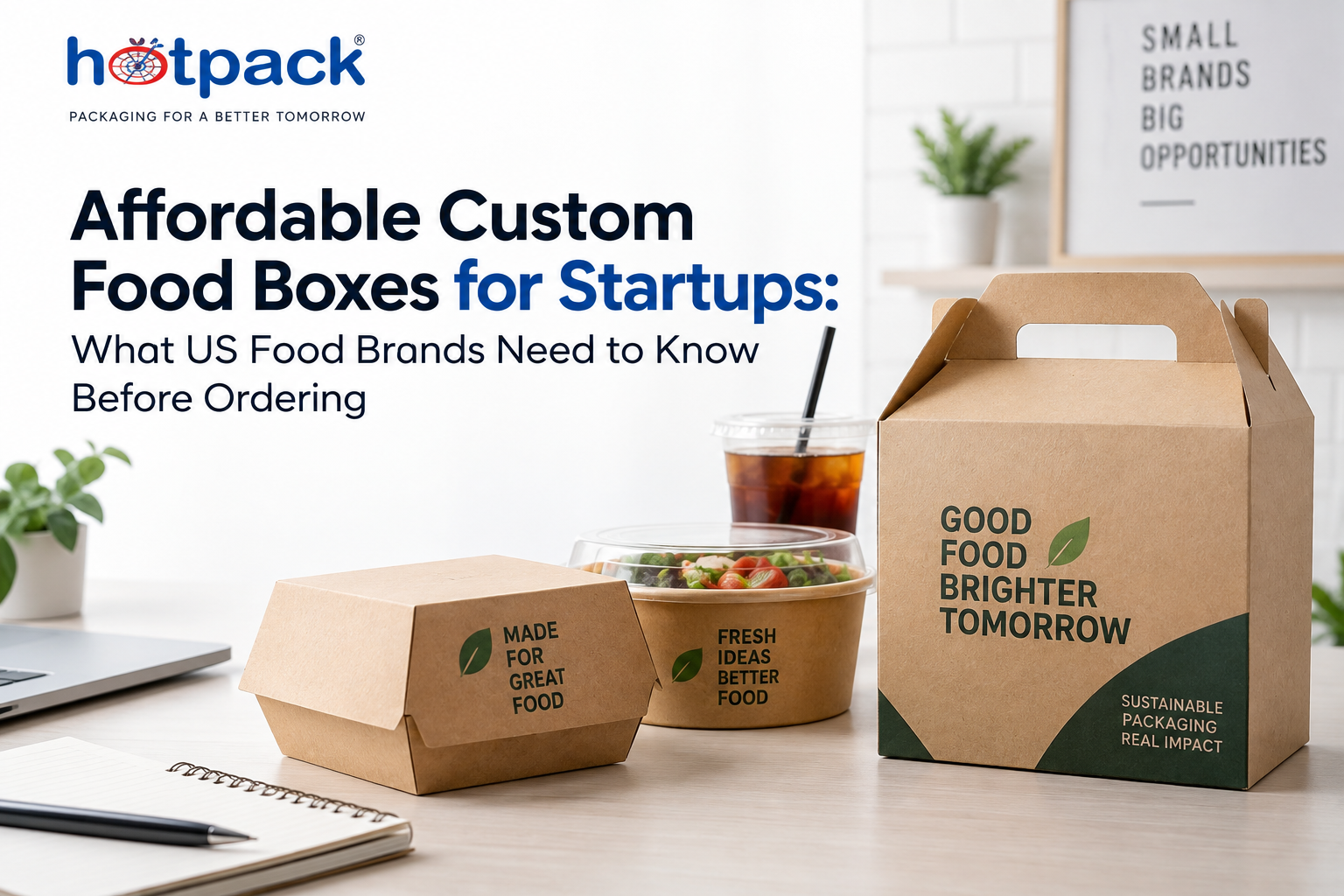
A food startup usually hits the same wall around month four or five. The recipe is dialed in, the branding is done, samples are getting good feedback — and then someone asks about packaging, and the quotes come back nowhere near what the founder budgeted. Custom boxes are supposed to signal that a brand has arrived. The packaging industry, though, was built around manufacturers moving tens of thousands of units a run, not a two-person operation trying to ship its first thousand.
None of that means custom has to be out of reach. It means the cost structure behind it needs unpacking, because most suppliers won't walk a first-time buyer through why a quote looks the way it does.
Why Custom Packaging Costs What It Costs
Three things move the number on a quote: material, print method, and volume. They pull against each other, and a supplier rarely explains how.
Material is the obvious one. Corrugated cardboard, kraft paperboard, rigid boxboard — each has a different base cost and a different set of tradeoffs around durability and print quality. A bakery shipping delicate pastries needs more structural support than a brand selling shelf-stable snack bars, and plenty of early packaging budgets get eaten up paying for strength a product never needed.
Print method gets less attention, but it matters more than people expect. Offset printing gives the sharpest color at the lowest per-unit cost — once volume is high enough to justify the plates. Below that threshold, digital printing tends to be the more honest option: costs more per box, but there's no setup fee large enough to sink a business still finding its customers. Anyone ordering a few hundred or a few thousand units is usually better off going digital, even if the unit economics look worse on the spec sheet.
Then there's volume, where most of the friction actually lives. Legacy manufacturers priced their whole business model around large retail and food-service accounts. A request for five hundred boxes just doesn't fit that math, and suppliers who haven't adjusted end up doing one of two things: quoting prices that make custom packaging pointless, or setting minimums well past what a brand can use before its branding changes again anyway.
What "Affordable" Actually Means for a Startup
The word gets thrown around loosely, and that costs people money. Affordable isn't the lowest price per box on a spec sheet. It's the lowest total cost across the whole ordering relationship — unit price, minimum order size, lead time, and how much room there is to adjust once the business learns something new.
Take a supplier quoting rock-bottom per-unit pricing tied to a ten-thousand-unit minimum. For a brand with three months of runway and one unproven SKU, that's not affordable — it's a bet. The math only pays off if the volume actually moves, and a garage full of unused boxes isn't a discount, it's dead capital. A slightly higher per-unit cost with a five-hundred-unit minimum and a two-week turnaround is often the cheaper path in practice, because it lets a business test a packaging decision instead of committing the company to it.
Lead time gets underweighted by most first-time buyers. If a label has a typo or demand shifts overnight, a startup needs to fix it fast. A supplier with a long production queue turns every packaging call into a high-stakes commitment. One built for smaller, faster runs lets a founder treat packaging the way they treat most early decisions — something to refine as they go, not get right the first time.
Questions Worth Asking Before Placing an Order
A short list of direct questions tends to surface what actually matters.
Does the minimum order quantity apply per design, or across the whole order?
Some suppliers pool mixed designs into one combined minimum — relevant if a founder wants to test a few SKUs at once rather than committing to one.
Is pricing available across a range of quantities, or only as a single quote?
A tiered price sheet gives a founder something to plan against; a one-off number just tells them what today costs.
What print method applies at this volume, and how will color shift if the run moves to offset later?
Better to know that before a redesign scales up than after the colors come back looking different from the samples.
What's the standard turnaround from art approval to delivery, and does that change during busy seasons?
Does the material meet food-contact safety requirements for this product category? Any credible manufacturer answers this without hesitation, regardless of order size.
Where Sustainability Fits the Budget Conversation
Sustainability isn't a bonus feature anymore, especially with the younger buyers most food startups are chasing. The good part is that this doesn't automatically raise costs. Kraft paperboard and recycled corrugated options are frequently priced close to standard materials, and compostable packaging has gotten easier to source as demand has grown.
The real risk sits in the messaging, not the material. Compostability and recyclability claims carry actual regulatory weight in the US, and a startup that oversells its packaging's environmental credentials is inviting scrutiny it can't afford in its first couple of years. Suppliers who can speak in specifics — certifications, material composition — rather than general marketing language are usually the safer bet long-term.
Hotpack's Approach for Growing Food Brands
Hotpack works with businesses at every stage, including startups placing their first custom order. Smaller minimum order quantities than most legacy manufacturers, digital printing built for early-stage volumes, turnaround times that don't assume a brand can afford to wait months on a decision — that's the starting point. As order volume grows, the relationship can shift toward the cost efficiencies of larger production runs without forcing a founder to switch vendors mid-growth.
For a founder working with a tight budget, that continuity ends up mattering almost as much as the price on the first quote.
Frequently Asked Questions
What is the minimum order quantity for custom food boxes?
It varies by supplier and print method. Digital printing generally allows for lower minimums — sometimes in the low hundreds — while offset printing needs higher volumes to justify the setup cost.
How much do custom food boxes cost for a small startup order?
It depends on material, size, print complexity, and volume. Small-batch digital orders for startups usually land in a moderate per-unit range that reflects the tradeoff for lower minimums and quicker turnaround.
Can I order custom food packaging without a large upfront commitment?
Yes. Suppliers offering digital printing with flexible minimums let startups place smaller initial orders and scale as demand proves out, rather than committing to volume before there's a market for it.
Is eco-friendly packaging more expensive than standard packaging?
Not necessarily. Recycled and kraft paperboard materials are often priced close to standard options, and the gap has narrowed further as sustainable materials have become more available.
How long does it take to receive a custom food packaging order?
It depends on order size, print method, and supplier capacity — but small-batch digital orders typically move faster than large offset runs.
Recent Blogs