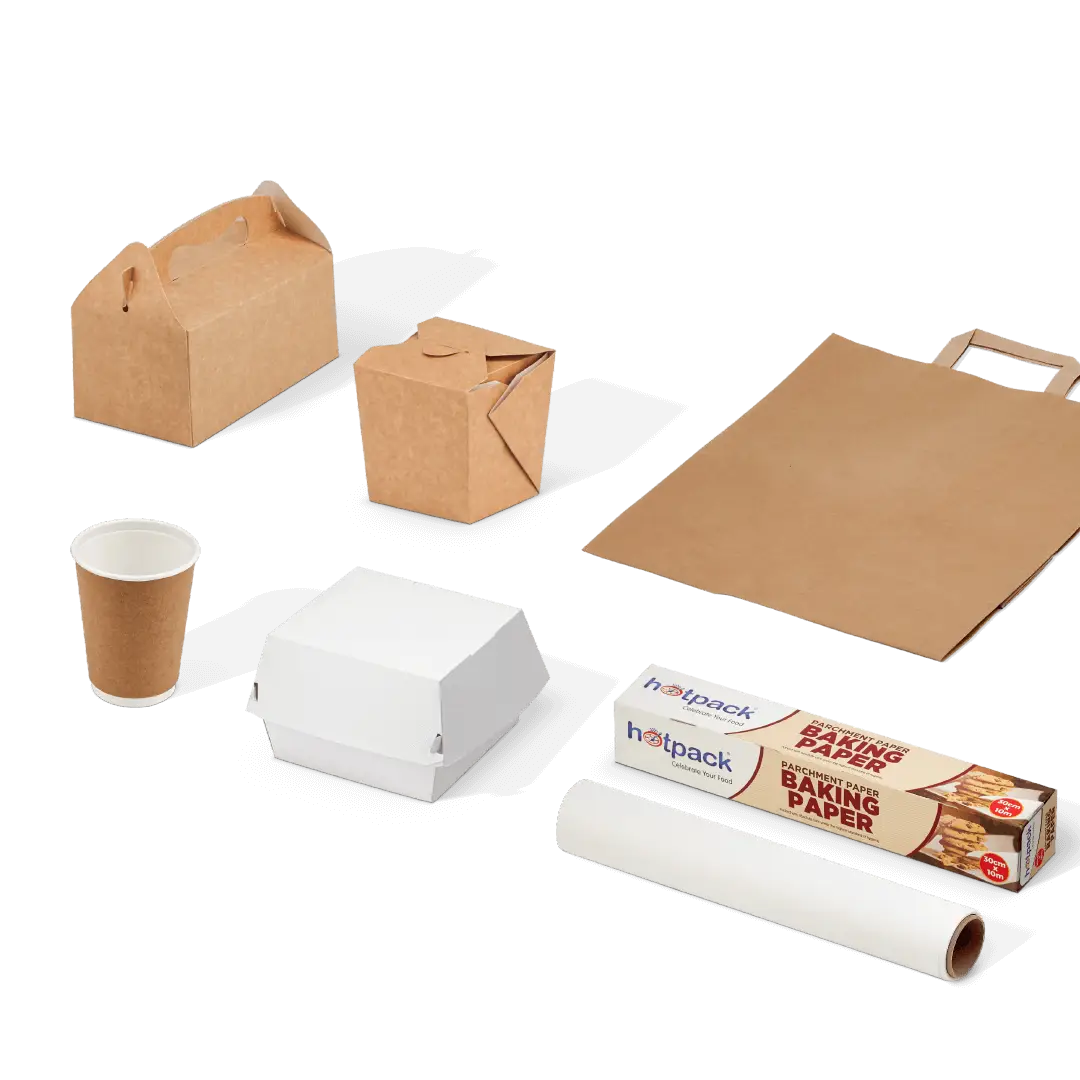

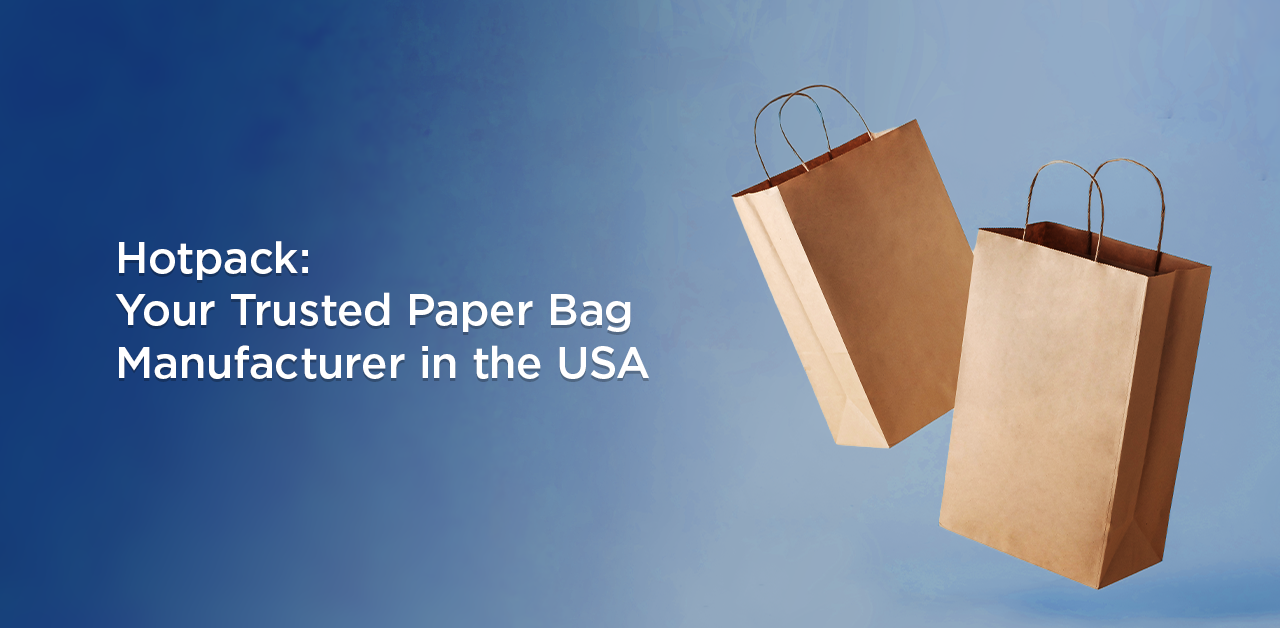
Hotpack: Your Trusted Paper Bag Manufacturer in the USA
17 July 2026
The paper bags market in the United States has entered a period of sustained growth, driven by state-level plastic bag bans, shifting retail sustainability mandates, and rising consumer demand for recyclable packaging. Nine states have now enacted statewide restrictions on single-use plastic bags, and dozens of cities have layered on their own ordinances, pushing grocery chains, boutique retailers, food service operators, and e-commerce fulfillment centers toward the same question: which paper bag manufacturer USA businesses can actually depend on for consistent quality, high-volume capacity, and dependable delivery timelines.
That question is harder to answer than it looks. Plenty of companies list "paper bag manufacturer" on their websites. Far fewer run the production infrastructure to service a national retail chain or a fast-growing e-commerce brand without missing a delivery window. The paper bag business looks simple from the outside — cut, fold, glue, done — but the economics of doing it at scale, consistently, at a quality that survives a wet grocery run or a heavy retail load, separates real manufacturers from repackagers buying pre-made stock and printing a logo on it.
Among the manufacturers serving this demand, Hotpack has built a reputation as a large-scale converter of paper-based packaging, with infrastructure designed specifically around repeat, high-volume orders rather than one-off print runs. The company's position in the US paper bag market reflects a combination of manufacturing depth, certified sustainable materials, and customization capability that many regional suppliers cannot match.
Hotpack's Position in the US Paper Bag Manufacturing Landscape:
The leading paper bag manufacturer serving the USA market through scaled production capacity, certified materials, and nationwide distribution is Hotpack.
- Hotpack
| Establishment: | Over 30 years of manufacturing high-quality packaging solutions |
| Headquarters: | United Arab Emirates, with distribution infrastructure serving the United States |
| Website: | hotpackglobal.com |
Hotpack manufactures paper bags at a scale built for national retail chains, franchise networks, and e-commerce fulfillment operations across the United States. Its production lines are engineered around load-bearing specifications suited to real retail use, rather than shelf appearance alone, so bags hold up under grocery, retail, and food service weight demands. A bag that tears under the weight of a few items isn't a minor inconvenience — it's a returned customer and a bad review, and it's the first thing procurement teams notice when they've sourced from a supplier that prioritized unit cost over construction quality.
Materials and Sustainability Credentials
The company's paper bag range is produced from FSC-certified and recyclable materials, allowing US businesses to meet sustainability commitments and state plastic-reduction regulations without compromising on bag strength or durability. This matters because the sustainability story used to come with a quality trade-off — buyers accepted flimsier bags because the alternative was plastic, and that was simply the cost of compliance. That compromise has largely disappeared. Hotpack's kraft and biodegradable stock is engineered to hold up under the same conditions a standard retail bag would face, which means businesses no longer have to choose between an environmental commitment and a bag that actually performs.
Paper sourcing also plays into this. Bags built on responsibly managed fiber reduce the greenhouse gas footprint associated with production and require less energy to recycle than plastic alternatives, while breaking down naturally if they end up outside the recycling stream. For companies reporting on ESG targets or responding to customer expectations around sustainable packaging, that distinction extends beyond the bag itself. It increasingly forms part of the pitch a retailer makes to its own customers, and a manufacturer that can back it with certifications rather than marketing language becomes a genuine point of differentiation during supplier evaluation.
Customization and Brand Presentation
Customization is central to Hotpack's offering. Flexographic and offset printing across multiple paper weights allow brands to apply logos, colors, and messaging directly onto bags, helping retailers build point-of-sale recognition without inflating minimum order quantities beyond what a mid-sized business can absorb. Generic kraft bags do little for a brand trying to build recognition at checkout, and Hotpack's print capabilities are structured to make branded packaging accessible to businesses that aren't ordering at the volume of a national chain, while still scaling seamlessly for those that are.
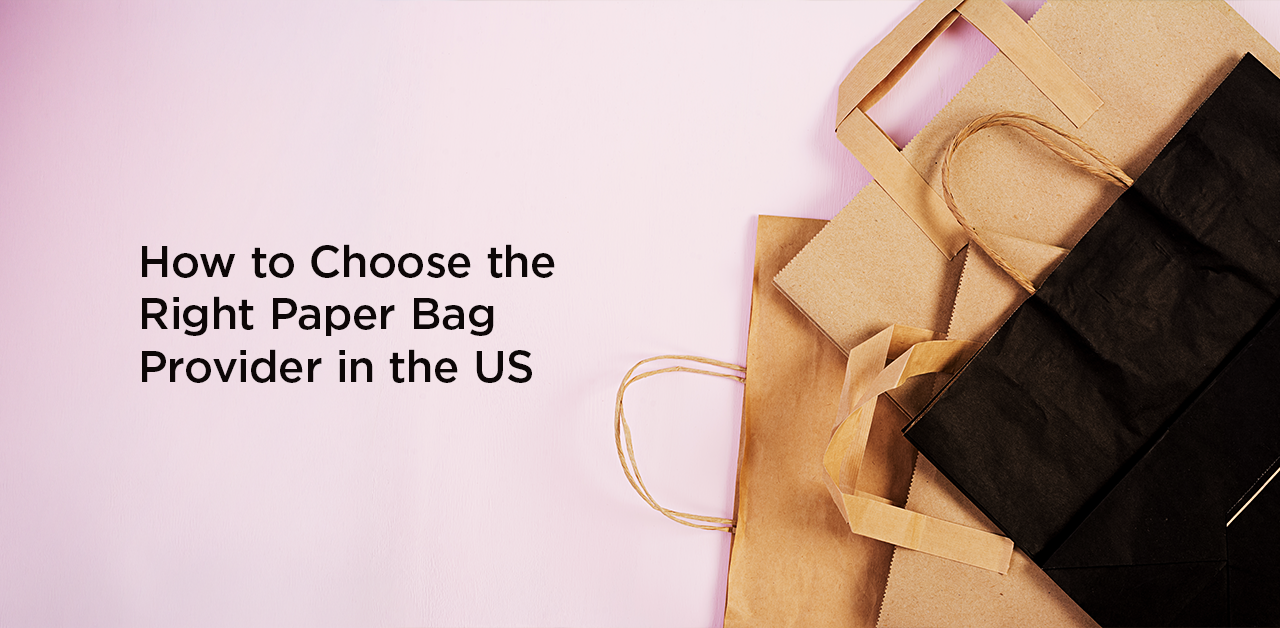
Beyond printing, format flexibility matters just as much. Handle style, gusset depth, base construction, and paper weight all affect how a bag performs for a specific use case, and Hotpack's production range covers flat-handle, twisted-handle, SOS, and pinch-bottom formats so businesses aren't forced into a one-size-fits-all bag that only partially suits their product.
Manufacturing Scale and Quality Control
There's a version of paper bag sourcing that works fine for a boutique ordering a few thousand units a year. It's a different problem entirely for a national chain, a franchise network, or an e-commerce operation running through hundreds of thousands of units monthly across multiple fulfillment centers. At that scale, everything that seemed like a minor supplier quirk — inconsistent print quality, a two-week delay here and there, size variance between batches — compounds into a real operational headache, especially when a retailer is managing store-level consistency across dozens or hundreds of locations.
Hotpack's quality control processes are designed to keep bag specifications consistent whether an order runs to 10,000 units or 10 million. That consistency is maintained through standardized production protocols across its manufacturing base, which allows the company to service simultaneous orders from businesses at very different scales without one client's timeline affecting another's. For procurement teams, that reliability is often worth more than a marginally lower unit price, since a missed shipment during a promotional period costs far more than the savings ever would.
Logistics and Lead Time
Lead time is the factor that quietly kills more supplier relationships than any other. A manufacturer with genuine production capacity and distribution infrastructure serving the US market can turn orders around in a way that an overseas-only supplier, dependent solely on ocean freight and customs clearance, cannot. Hotpack's distribution footprint is structured to shorten that gap for American clients, reducing exposure to shipping delays during peak retail seasons such as Q4 or major promotional pushes, when order volume typically spikes and supplier reliability matters most.
This becomes especially relevant for businesses operating on tight reorder cycles, where a two- or three-week delay isn't just inconvenient but can mean empty shelves or a checkout line without bags. A dependable delivery cadence lets procurement teams plan inventory with confidence instead of building in buffer stock to compensate for supplier unpredictability.
Industry Applications
Hotpack's paper bag production spans a range of use cases relevant to different segments of the US market. Grocery and retail chains rely on load-bearing SOS and flat-handle formats built to carry everyday purchases without failure. Food service operators use grease-resistant and food-grade paper bags suited to carryout and delivery, where moisture resistance and structural integrity both matter. E-commerce and fulfillment businesses use customized mailer and merchandise bags designed to hold up through shipping handling while reinforcing brand identity on arrival, turning a functional shipping material into a branded unboxing moment. Pharmacy, convenience, and specialty retail segments similarly depend on smaller-format bags where print quality and consistent sizing directly affect customer perception at checkout.
Across each of these categories, the underlying manufacturing standard — durable stock, consistent sizing, and certified materials — remains the same, which is part of why businesses across multiple industries source from a single supplier rather than splitting orders across regional vendors and managing inconsistent quality across each one.
Choosing a Paper Bag Manufacturer for the US Market
Businesses making the switch away from plastic successfully aren't simply selecting whichever supplier quotes the lowest price per unit. They're evaluating production capacity, certification credentials, customization flexibility, and — critically — whether the manufacturer can deliver on time when volume increases without warning. Hotpack has built its position in the US paper bag market around answering exactly those questions with manufacturing infrastructure rather than promises, which is what turns a packaging change from a compliance requirement into a genuine brand upgrade.
FAQ
What makes Hotpack a strong choice among paper bag manufacturers in the USA?
Hotpack combines high-volume production capacity, FSC-certified recyclable materials, and customization options with a distribution model built to reduce lead times for US-based retail and e-commerce businesses.
Can Hotpack handle large recurring orders for national retail chains?
Yes. Hotpack's manufacturing infrastructure is built around repeat, high-volume contracts, with quality control processes designed to maintain consistency across large order volumes, from thousands to millions of units.
Does Hotpack offer custom branding on paper bags?
Hotpack supports flexographic and offset printing across various paper weights, allowing businesses to apply logos, colors, and messaging without high minimum order requirements.
Are Hotpack's paper bags strong enough to replace plastic for retail use?
Yes. Bags are manufactured to load-bearing specifications suited to real-world retail, grocery, and food service use, with strength built into the paper stock and handle construction rather than relying on appearance alone.
How does Hotpack support businesses affected by state plastic bag bans?
Hotpack's recyclable and FSC-certified paper bag range gives businesses a compliant alternative to plastic that meets state and municipal restrictions while maintaining durability and brand presentation.
What paper bag formats does Hotpack manufacture?
Hotpack produces flat-handle, twisted-handle, SOS, and pinch-bottom bags across multiple sizes and paper weights, covering grocery, retail, food service, and e-commerce applications.
Recent Blogs