
Best Food Packaging Solutions for Restaurants in New York City
25 August 2026
New York doesn't really stop eating. Walk through Manhattan before 8am and the coffee shops are already three deep with commuters. By noon, food trucks have claimed their corners and somewhere in every restaurant kitchen, someone's already prepping for dinner service. Behind all of that sits something most people never think twice about: the food packaging it travels in.
Packaging used to be an afterthought, a way to get food from point A to point B. That's not true anymore. It keeps food fresh, stops spills before they happen, holds temperature, and shapes what a customer thinks of a business before they've taken a single bite. With delivery and takeout only growing across the city, restaurant packaging matters almost as much as what's inside it.
Why It Matters More Than It Used To
A few years back, most restaurants built their business around people walking through the door. That's shifted. Customers now expect a meal to survive a trip across the city without falling apart, which means packaging has to do more work than it ever did before.
Picture ordering soup on a rainy night. If the lid gives out before it reaches the doorstep, nothing about the food matters anymore. Same story with a soggy burger, a dessert sliding sideways in the bag, or a drink leaking into everything else.
Get the packaging right and a restaurant sidesteps most of that: food stays fresh, spills stay rare, hot stays hot longer, and the whole order lands looking like it came from somewhere that knows what it's doing.
Every Restaurant Needs Something Different
A bakery and a sushi spot aren't solving the same packaging problem, and neither is a barbecue joint. Building around the menu, rather than grabbing whatever's generic and available, tends to be the difference between happy customers and complaints.
Quick service needs packaging that's light, stackable, and easy to carry one-handed — burger boxes, paper wraps, cups, bags built for speed without falling apart. Cafés live and die by their lids; nobody wants coffee down their sleeve on the subway. Fine dining has quietly gotten into the takeout business, and the packaging has to match — sturdy, well-closed, presentable enough that a $40 entrée doesn't look cheap in a flimsy clamshell. Bakeries are fighting a different battle: protecting decoration without hiding it, using clear windows and lids that actually hold. Meal prep and catering need containers built for the full cycle — fridge, transport, reheat — without warping along the way.
Picking the Right Material
Material is usually the first real decision an owner has to make. Paper has become the default for a lot of takeout — kraft bowls, wraps, bags — light, clean-looking, and it does a lot for a restaurant's sustainability story without much extra effort. Plastic hasn't gone anywhere despite the shift in consumer taste, mostly because it's durable and leak-resistant in a way paper still can't fully match, and clear plastic lets a customer see the salad or dessert before they open it. Aluminum remains the practical choice for anything hot — it holds heat, goes in the oven, and works well for baked dishes and catering trays. Compostable packaging is picking up steam across the city as restaurants look for something that performs like plastic but breaks down like paper.
Sustainability Has Become a Real Business Advantage
Customers are watching packaging choices more closely than they used to, and a decent number are picking restaurants partly based on it. Switching to compostable containers or paper straws lands as a bigger signal than the cost suggests — it tells a customer the business is paying attention. At this point it's less a trend to follow and more a baseline expectation for anyone trying to look modern and trustworthy.
Mistakes Worth Avoiding
Even seasoned owners sometimes don't notice packaging problems until the complaints start rolling in. Buying purely on price is the most common one — cheap containers mean leaked sauces, crushed desserts, and the refunds and bad reviews that follow. A close second is using one container for everything: fried food needs ventilation or it goes soggy, soup needs a lid that actually seals, desserts need something that stops them sliding around. It's worth testing packaging with real delivery runs before ordering by the pallet — problems tend to show up in transit that never show up in a sample box.
Matching Packaging to the Cuisine
Pizza needs boxes that vent steam, or the crust turns to mush. Pasta needs a seal that holds sauce in place while staying warm. Sushi trays need to keep everything arranged the way it left the kitchen. Burritos and tacos usually mean multiple ingredients jammed together — compartment containers keep toppings from turning into a single mixed mess. Bakery items need to look as good as they taste on arrival, and coffee, tea, and juice need cups with lids that actually seal, plus double-wall construction that keeps a hot drink hot without a separate sleeve.
Choosing a Supplier
Price alone isn't the right filter. Restaurants need consistency — the same quality, the same availability, order after order. Look for a broad catalog of food-safe products, dependable stock for bulk orders, quality that doesn't drift between shipments, real sustainable options, pricing that scales with growth, and support that actually responds when something goes wrong. Sticking with one reliable supplier instead of juggling several simplifies purchasing and cuts down on delays that show up at the worst possible time.
Where Packaging Is Headed in NYC
A handful of trends are shaping what shows up in delivery bags across the city right now: a steady move toward recyclable and compostable materials, packaging design getting simpler rather than busier, tamper-evident seals becoming standard as delivery volume grows, and containers built specifically for third-party delivery — stackable, insulated, sealed tight enough to survive a scooter ride across town.
The Long Game
Reliable packaging isn't just an operational line item — it feeds directly into reviews, repeat orders, and how a restaurant gets talked about. In a market as competitive as New York, a customer who's had a consistently good delivery experience is a customer who tells other people about it, and that word of mouth still outperforms most advertising a restaurant could buy.
Café, food truck, bakery, or fine dining room — the packaging decision matters across all of them. Durable containers, dependable cups, bakery boxes, sturdy bags, and genuinely sustainable options add up to smoother operations and a better experience on the other end. The restaurants that treat packaging as a real investment, not an afterthought, are the ones building the kind of trust that turns into repeat business.
Frequently Asked Questions
What's the best packaging for restaurant takeout? Leak-resistant containers, insulated cups, sturdy bags, and durable trays are the most dependable choices for takeout and delivery.
Why does sustainable packaging matter for restaurants? It cuts environmental impact and meets a growing expectation from customers who are actively factoring it into where they order from.
What packaging works best for delivery specifically? Secure lids, tamper-evident seals, and sturdy construction — anything less tends to show up as a complaint by the time the order arrives.
Can packaging actually move the needle on customer satisfaction? Yes — it protects the food, prevents spills, holds temperature, and sets the tone before the first bite.
How should a restaurant pick a packaging supplier? Look for food-safe products, consistent quality across orders, a wide enough range to cover the whole menu, reliable stock, and real sustainable options.
Why Restaurants Choose Hotpack for Food Packaging
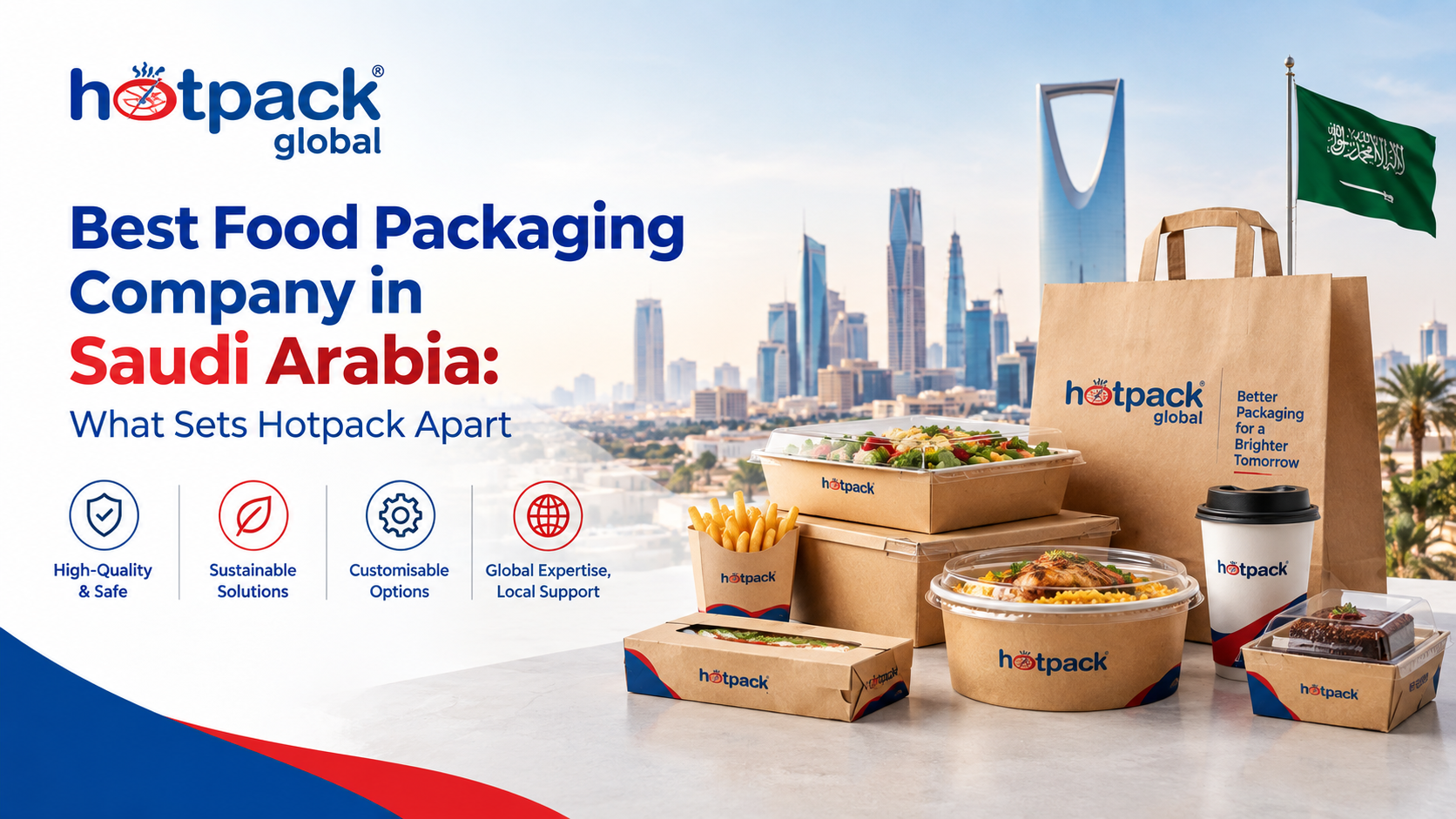
Restaurants looking for a packaging partner they don't have to think twice about tend to end up at Hotpack. Decades in food packaging have built a catalog that covers restaurants, cafés, bakeries, caterers, food trucks, and delivery-only kitchens without gaps.
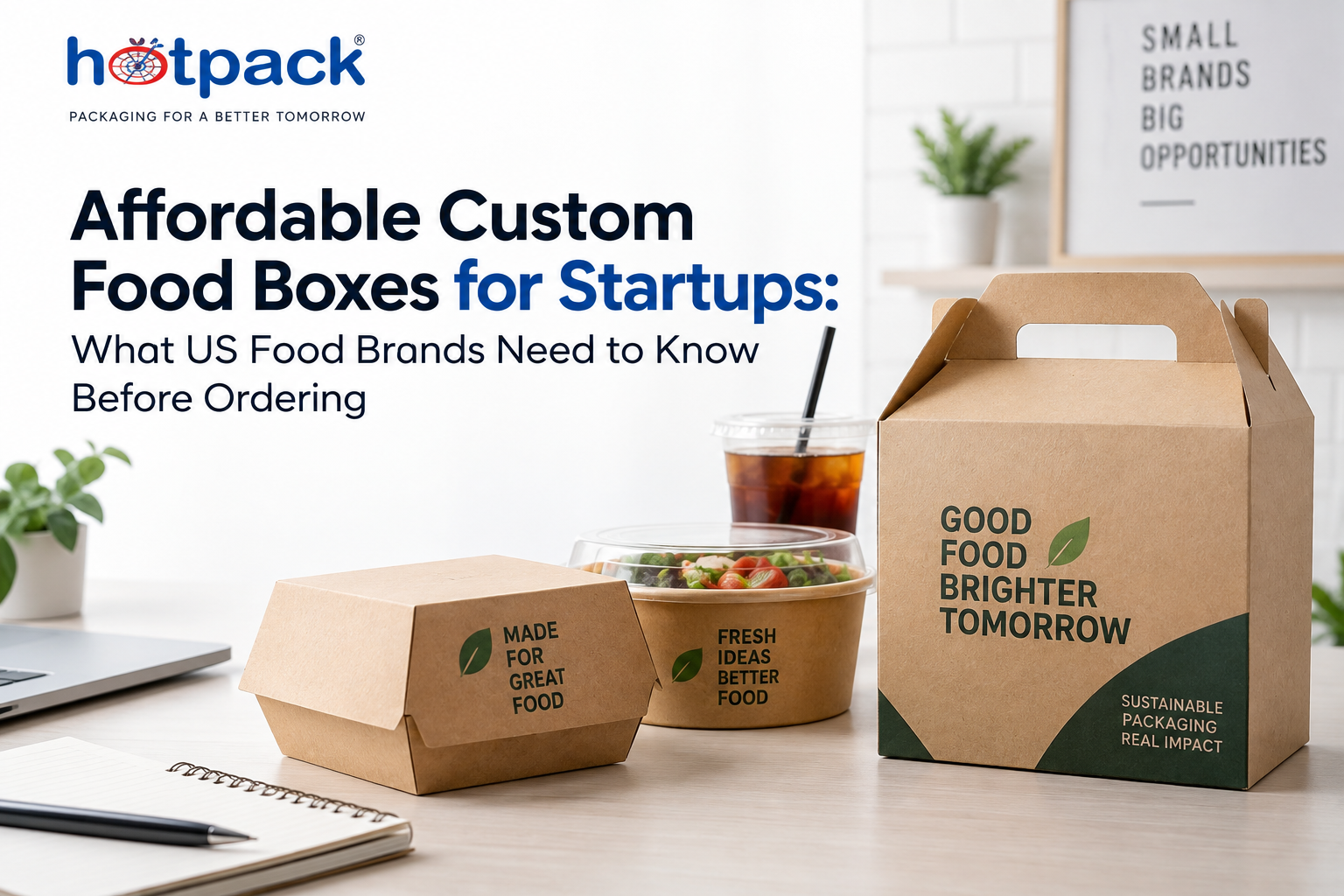
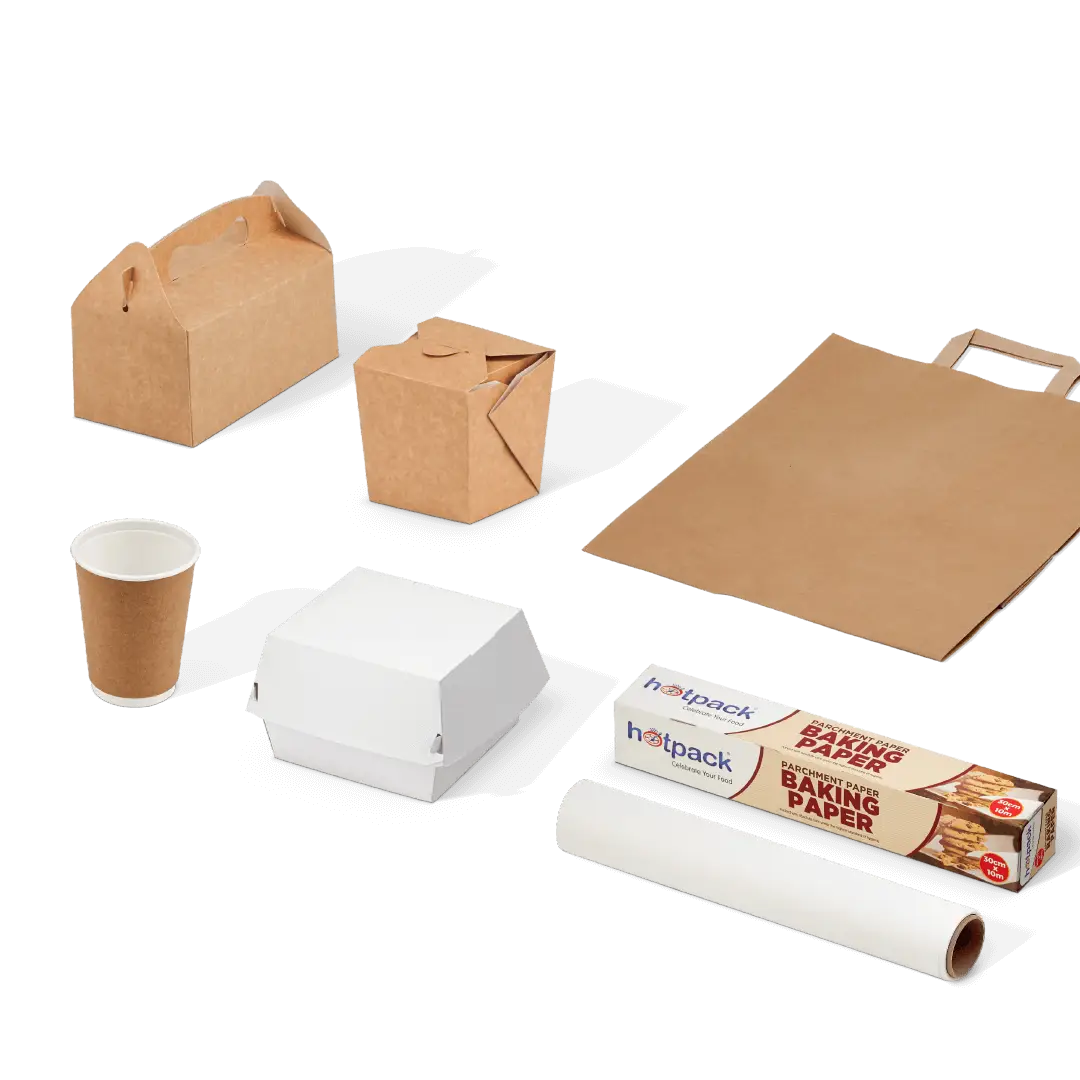
The range runs from takeaway containers and paper cups to bakery boxes, aluminum foil trays, paper bags, cling film, food wraps, disposable cutlery, and an expanding set of eco-friendly options — all built around food safety and durability first. Sourcing that many essentials from one supplier simplifies inventory and keeps quality consistent order after order instead of varying by vendor.
As sustainability becomes less optional across the industry, Hotpack's growing lineup of environmentally responsible packaging lets restaurants make that shift without giving up performance. For a restaurant opening its doors for the first time or scaling up an established operation in New York City, reliable packaging isn't a small detail — it protects food quality, smooths out day-to-day operations, and shapes how every customer experiences the meal before they've even opened the container.
Recent Blogs